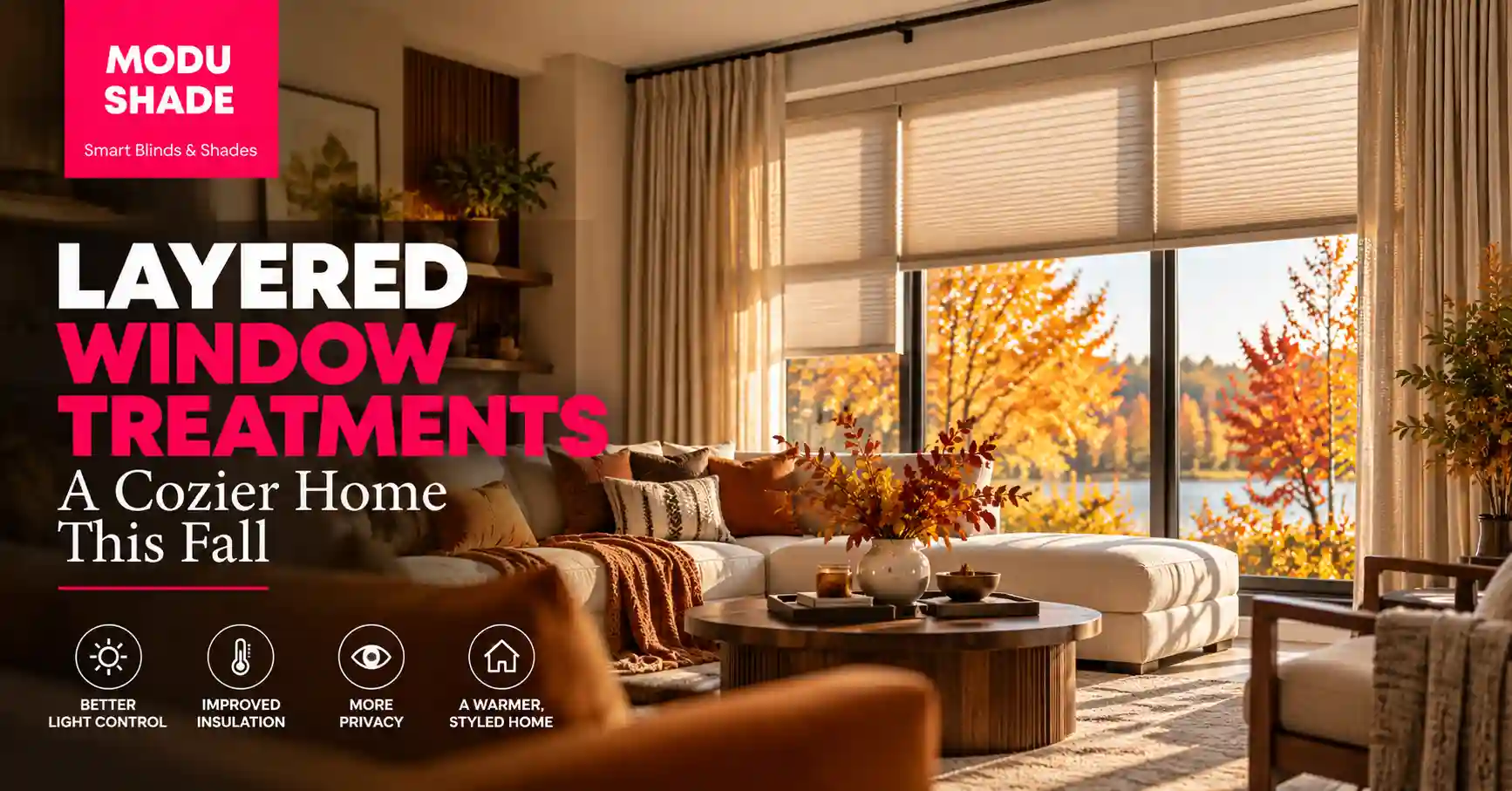
Layered window treatments combine comfort, privacy and style in a single solution. A shade is just up against the glass, regulating the amount of sunlight, privacy, and some draughts. Drapery creates a soft effect and provides a sense of warmth and comfort. When used at the same time, it’s easy to control the light and privacy throughout the day. Open the drapes to get natural light in the room, or close both drapes for a cosy and private room. This basic pairing provides a complete look to your windows and enhances your home’s comfort.
If winter’s close and you can only fix a few windows, start with the bedrooms and anything facing north or west. Those are the rooms people complain about first, once the mornings turn cold. There’s a practical reason it works, too. Glass gives up heat fast, and one thin covering doesn’t slow that down much. Two layers leave a pocket of still air between them, and that pocket makes a difference.
Why Fall Is the Right Time to Layer
Most people think about window treatments in spring, when the house feels fresh, and the light is bright. But fall is when the problems show up. Mornings are colder. The sun comes in at a lower angle and lands in places it didn’t all summer. It’s dark before dinner. A room that felt fine in July suddenly seems drafty, or too bright at 4 p.m., or just a little bare.
It’s also the smart time to order. Custom treatments are made to your exact windows, so there’s measuring, picking fabric, production, and then installation. Start in October, and it’s all done before the first real cold snap. Start in January, and you’re sitting in a chilly room waiting on a delivery. And there’s a style bonus. Linen, textured weaves, and heavier drapery look right in fall light. Layering lets you bring those fabrics in without giving up any control over how much sun gets through.
Signs Your Windows Need Better Treatments
Here’s what usually tells people it’s time:
- You get a chill sitting near the window, even with the heat running.
- The curtains move a little, and nothing nearby is open.
- The sun is up too soon in the morning.
- At night, the street lights shine through the bedroom window.
- Old blinds are bent, yellowed, or difficult to manoeuvre.
- The glare reflects off your TV or computer screen.
- Furniture and floor around windows are beginning to wear out.
- There are always a number of rooms in the house that are cooler than the others.
- Normal blinds do not work on some windows, so they remain blank.
If a few of these sound like your house, a better setup is worth looking at. What works best depends on the room, the size of the window, and how you use the space.
How Layered Window Treatments Work
Every layered setup has two parts. The base layer sits closest to the glass, usually a shade or a blind. It handles the sunlight and the privacy, and it cuts down on air moving around the window. The outer layer is usually a curtain or a drapery panel. It adds softness and style, and it gives you one more barrier against the cold.
Where you put them matters. A shade mounted inside the frame looks neat. The curtain rod goes above the window and wider than the frame, so when the drapes are open, they stack beside the glass and don’t block it. That keeps the window clear during the day.
When the drapes are closed, they should reach past the edges of the window. That closes up the gaps and makes the whole thing look complete. The mistake we see most is curtains hung right at the edge of the frame. The window looks smaller, there’s no room for the panels when they’re open, and you lose light. A wider rod fixes all of that.
Cellular Shades for Winter Insulation
If your windows feel cold, cellular shades (some people call them honeycomb shades) are usually where we’d begin. The fabric is folded into little pockets, and those pockets trap air between the glass and the room. It’s a simple idea, and it makes the area around the window feel less chilly.
The fit matters more than most people expect. If the shade is cut even a little too narrow, air slips through the gaps along the sides and you lose much of the benefit. That’s why we measure every window at the top, middle, and bottom before we order anything.
Energy-Efficient Window Treatments: What Helps and What Doesn’t
You’ll see big promises online about how much a window treatment will save you. We’d rather not throw out a number, because it depends on your windows, your heating system, and how you use the shades. What we can tell you is what tends to help.
A snug fit helps. Big gaps cancel out a lot of the benefit. Two layers beat one thin layer. Lined drapes add another barrier near the glass. And habits count: if you close the shades and curtains in the evening, you’ll hold on to more warmth through the colder hours.
What doesn’t help much? Thin decorative curtains hung only for looks, and shades that are too small for the opening. If a treatment doesn’t cover the window properly, it can’t do its job.
Roman Shades for Cozy Fall Interiors
Roman shades suit people who like the look of fabric but don’t want full-length curtains. They fold into soft horizontal pleats when you raise them and lie flat when you lower them. Add a lining, and they cover better and look more finished.
For fall, linen and textured fabrics in colors like olive, rust, and warm gray look great in a lot of rooms. Want something brighter? Go lighter, and the room stays open and airy. Roman shades can stand on their own in kitchens, dining rooms, and home offices. They also pair well with drapery. Put the shade inside the frame, hang a panel on each side, and you get a balanced look that doesn’t crowd the window.
Blackout Shades for Winter Bedrooms
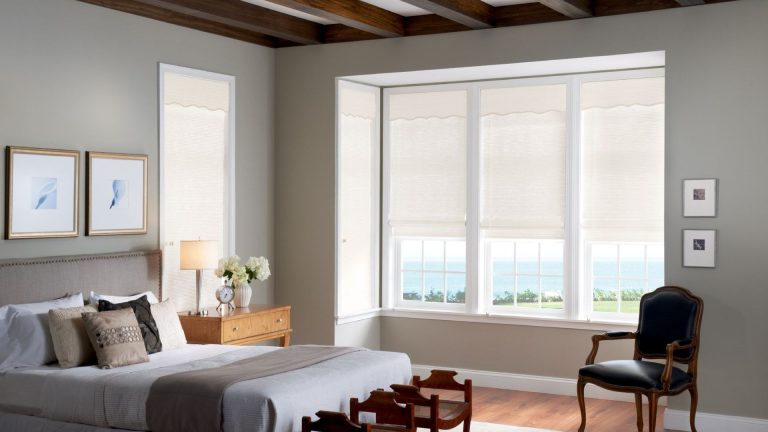
Winter bedrooms tend to have two problems. The glass is cold, and light sneaks in early in the morning. A blackout shade takes care of the second one, which makes it a good choice if you sleep better in a dark room.
But the fit matters as much as the fabric. If the shade isn’t mounted well, light leaks in along the sides or across the top, and the room never gets properly dark. Depending on the window, an inside mount might do the job, or a wider outside mount might close those gaps better. Add lined drapery on top, and you get another layer, plus a softer look. That combo also cuts down on heat loss around the window, though how much depends on the fit and how the products are built.
Motorized Shades for Winter Comfort
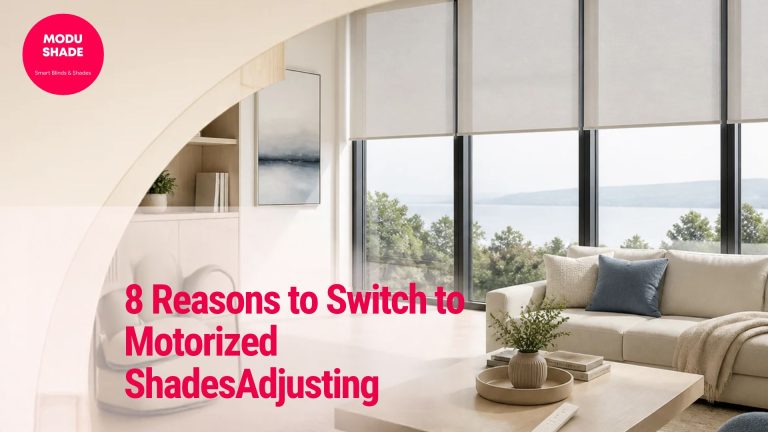
Motorized shades earn their keep on windows that are hard to reach. Tall windows, stairwells, wide sliding doors, and anything behind a sofa all get ignored if you have to climb or stretch to use them. With a motor, you don’t move furniture or reach across the room. You press a button.
Many systems also let you set a schedule. Open the shades in the morning to let the sun in, close them at night for privacy, and don’t think about it again. Depending on the setup, you can run them with a remote, a wall switch, a phone app, or your voice. Motors come in battery-powered and hardwired versions. Which one’s better depends on where the window is and how often you’ll use the shade. When we install them, we set the stopping points ourselves and test the controls with you before we leave.
Layering Combinations Compared
| Combination | Best For | Main Benefits | Things to Consider |
| Cellular shade + lined drapery | Bedrooms, living rooms, north-facing windows | Added insulation, light control, soft finish | Requires enough wall space for curtains |
| Roman shade + drapery | Dining rooms, offices, formal living rooms | Tailored appearance, texture, added coverage Modu Shade | Check the space needed when raised |
| Roller shade + sheer curtains | Modern rooms, apartments | Simple style and adjustable privacy | Usually offers less insulation than cellular shades |
| Blackout shade + drapery | Bedrooms, nurseries | Better light control and added coverage | Careful fitting helps reduce light gaps |
| Blinds + drapery | Kitchens, sliding doors, home offices | Adjustable light with a softer finish | Blinds generally provide less insulation than cellular shades |
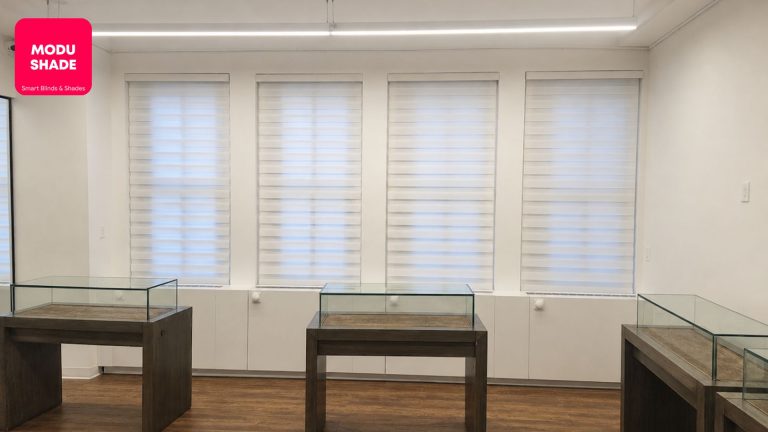
| Zebra or sheer shade + drapery | Rooms needing daytime privacy and a view | Flexible light control throughout the day | Not designed for complete darkness Modu Shade |
Room by Room: Where to Start
In the living room, a light-filtering cellular shade with floor-length drapery keeps things bright during the day and feels warmer at night. In the bedroom, a room-darkening shade with lined curtains gives you privacy and control over the light.
Kitchens and dining rooms do well with Roman shades or custom blinds, since they look neat and are easy to adjust. In a home office, a roller or zebra shade tames screen glare without shutting out daylight. And for sliding doors and big windows, motorized shades or curtains make it much easier to actually close them every evening.
Prepare Your Windows for Winter: A Simple Fall Plan
Start by walking around the house one evening. Notice which rooms feel cold, which windows let in too much light, and where your current coverings aren’t pulling their weight. That tells you which windows to deal with first.
Then book a consultation and look at fabric samples in your own home. A color that looks warm under showroom lights can look flat in your living room at 4 p.m., so it’s worth checking in the real light. Pick the shades, fabrics, and controls that fit each room, and order early enough that manufacturing and installation finish before the coldest weeks.
What We Check at a Free In-Home Consultation
When we visit, we look at the details that decide how your window treatments will fit, look, and work.
- How you use each room through the day.
- Which way each window faces and how much sun it gets.
- How deep the window is, what the trim looks like, and anything that could get in the way of an inside mount.
- Whether battery or hardwired motors would suit the room better.
- Any gaps where light could sneak around a blackout shade.
- Fabric samples, viewed in your home’s natural light.
- Your budget, and what’s possible within it.
We measure every window on site, and our own team does the installation. So the person who measured your window is the one who puts the shade up.
Custom Window Treatments in Cresskill, NJ
Modu Shade is based in Cresskill, and we work across Bergen County, Northern New Jersey, Hudson County, and Manhattan. Being local means we can bring samples to your door, double-check a measurement, or come back and adjust something without it turning into a big deal.
For a related local example, see our zebra shades installation article in Cresskill, NJ. The homes around here vary a lot. Some are older Bergen County houses with tall double-hung windows, and others are modern apartments with big panels of glass. Each needs a different approach, so we pick treatments based on the opening, the layout of the room, and how you want the space to look and work.
Frequently Asked Questions
What are the best window treatments for winter?
For a lot of homes, cellular shades with lined drapery are a solid mix of insulation, light control, and style. The right pick still depends on the size of the window, how you use the room, and how much light and privacy you want.
Do cellular shades really help in cold weather?
They do. The honeycomb shape traps air, and that slows down heat moving through the window. A close fit matters here, so accurate measuring and good installation are worth the effort.
Can blackout shades make a bedroom warmer?
We add another layer at the window, especially with lined drapery over them. They block outside light too. How much warmth you gain depends on the materials and the fit.
Are motorized shades worth it for winter?
For tall, wide, or hard-to-reach windows, yes. They get used more because they’re easy. Some systems can open and close on a schedule too, which helps with sunlight and privacy.
How long does it take to get custom window treatments?
Each one is measured and made for your windows, so production takes some time. Order in early fall and you’ll have room to schedule installation before the colder weeks arrive.
Can I layer different types of treatments?
Yes. Cellular shades go well with drapery, Roman shades work with curtain panels, and roller shades can pair with sheer curtains. The best combination comes down to your room, your windows, and how you want to control light.
Do you offer a free consultation?
Yes. We come to your home with samples, measure the windows, and go over options that fit your space and budget. You can look over our recommendations with no pressure to order.
Ready to Layer Your Windows This Fall?
Tell us which rooms get cold in winter or catch too much sun during the day. We’ll bring samples to your home, measure your windows, and help you pick treatments that fit. From cellular shades to full layered setups, we’ll explain your options in plain language. Visit Modu Shade to book your free in-home consultation. Our own team handles the installation and checks that every treatment fits right. We want your new window treatments to look good, work smoothly, and make your home more comfortable every day.